- 4.9/5.0
- 180 Questions
- Updated on: 12-Oct-2026
- Conducting Forensic Analysis and Incident Response Using Cisco CyberOps Technologies (CBRFIR)
- 21805 Prepared
Free Cisco 300-215 Practice Questions 2026 | Conducting Forensic Analysis and Incident Response Using Cisco CyberOps Technologies (CBRFIR)
Refer to the exhibit.
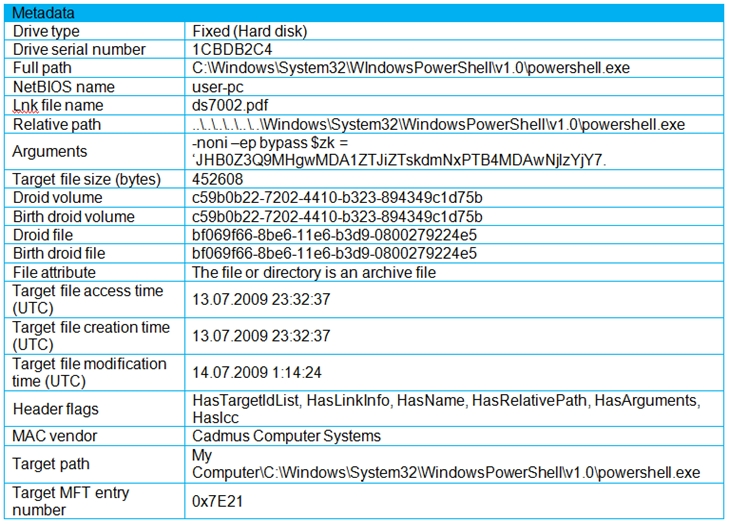
An engineer is analyzing a .LNK (shortcut) file recently received as an email attachment
and blocked by email security as suspicious. What is the next step an engineer should
take?
A. Delete the suspicious email with the attachment as the file is a shortcut extension and does not represent any threat.
B. Upload the file to a virus checking engine to compare with well-known viruses as the file is a virus disguised as a legitimate extension.
C. Quarantine the file within the endpoint antivirus solution as the file is a ransomware which will encrypt the documents of a victim.
D. Open the file in a sandbox environment for further behavioral analysis as the file contains a malicious script that runs on execution.
Refer to the exhibit.
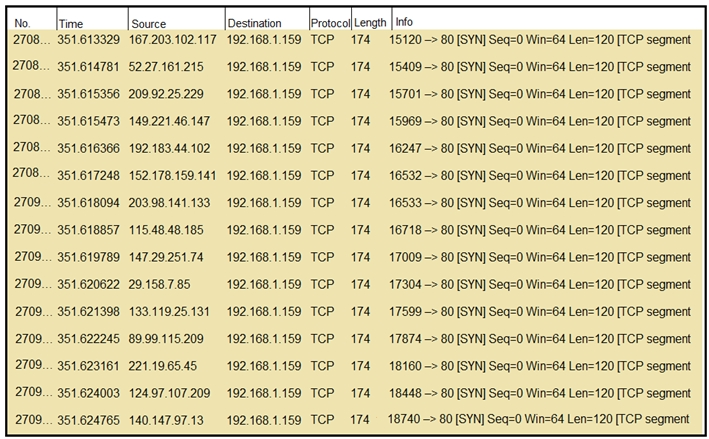
What should an engineer determine from this Wireshark capture of suspicious network
traffic?
A. There are signs of SYN flood attack, and the engineer should increase the backlog and recycle the oldest half-open TCP connections.
B. There are signs of a malformed packet attack, and the engineer should limit the packet size and set a threshold of bytes as a countermeasure.
C. There are signs of a DNS attack, and the engineer should hide the BIND version and restrict zone transfers as a countermeasure.
D. There are signs of ARP spoofing, and the engineer should use Static ARP entries and IP address-to-MAC address mappings as a countermeasure.
Refer to the exhibit.
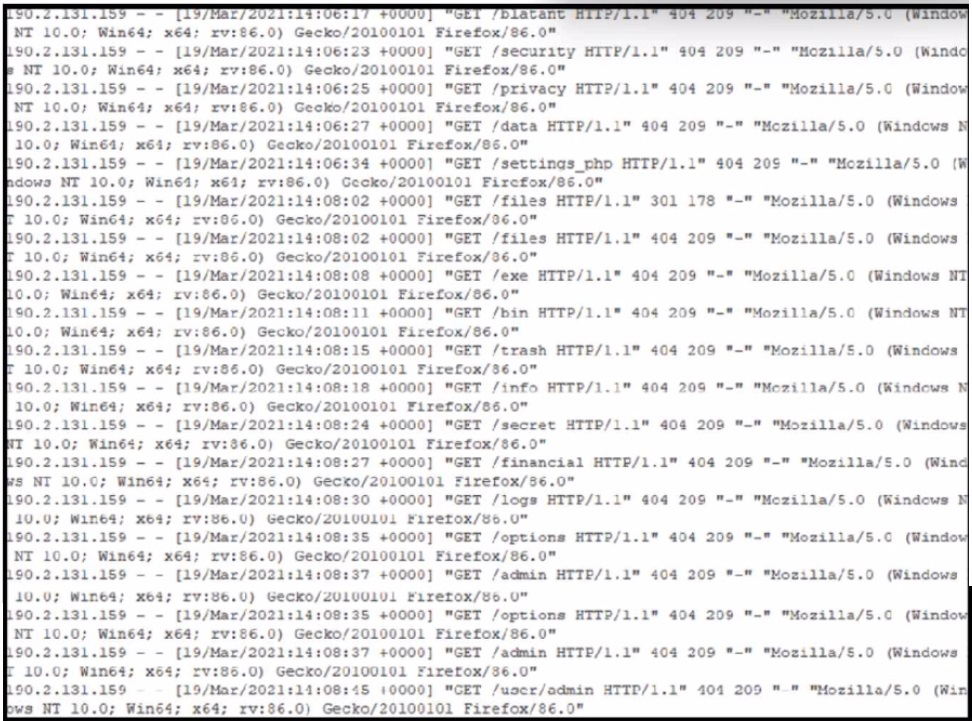
A security analyst notices that a web application running on NGINX is
generating an unusual number of log messages. The application is operational and
reachable. What is the cause of this activity?
A. botnet infection
B. directory fuzzing
C. DDoS attack
D. SQL injection
Refer to the exhibit.
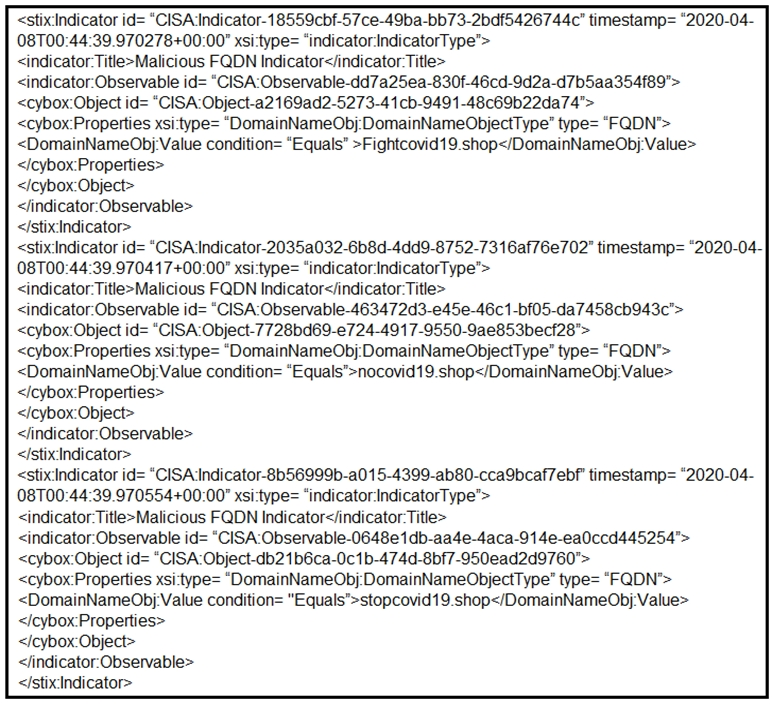
Which two actions should be taken based on the intelligence information? (Choose two.)
A. Block network access to all .shop domains
B. Add a SIEM rule to alert on connections to identified domains.
C. Use the DNS server to block hole all .shop requests.
D. Block network access to identified domains.
E. Route traffic from identified domains to block hole.
D. Block network access to identified domains.
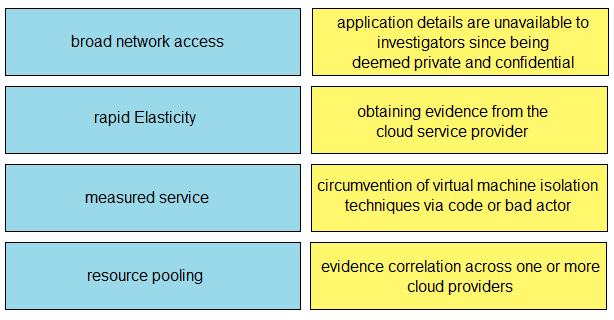
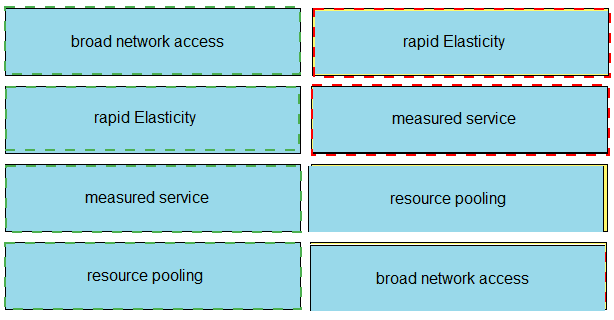
Drag and drop the cloud characteristic from the left onto the challenges presented for
gathering evidence on the right.
| Page 2 out of 18 Pages |