- 4.9/5.0
- 653 Questions
- Updated on: 12-Oct-2026
- Implementing Cisco Enterprise Advanced Routing and Services (300-410 ENARSI)
- 26535 Prepared
Free Cisco 300-410 Practice Questions 2026 | Implementing Cisco Enterprise Advanced Routing and Services (300-410 ENARSI)
Topic 3, Exam Pool C
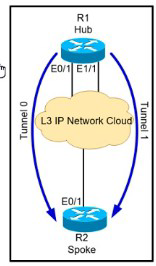
Refer to me exhibit. The hub and spoke are connected via two DMVPN tunnel interfaces The NHRP is configured and the tunnels are detected on the hub and the spoke Which configuration command adds an IPsec profile on both tunnel interfaces to encrypt traffic?
A.
tunnel protection ipsec profile DMVPN multipoint
B.
tunnel protection ipsec profile DMVPN tunnel1
C.
tunnel protection ipsec profile DMVPN shared
D.
tunnel protection ipsec profile DMVPN unique
tunnel protection ipsec profile DMVPN shared
Refer to the exhibit.
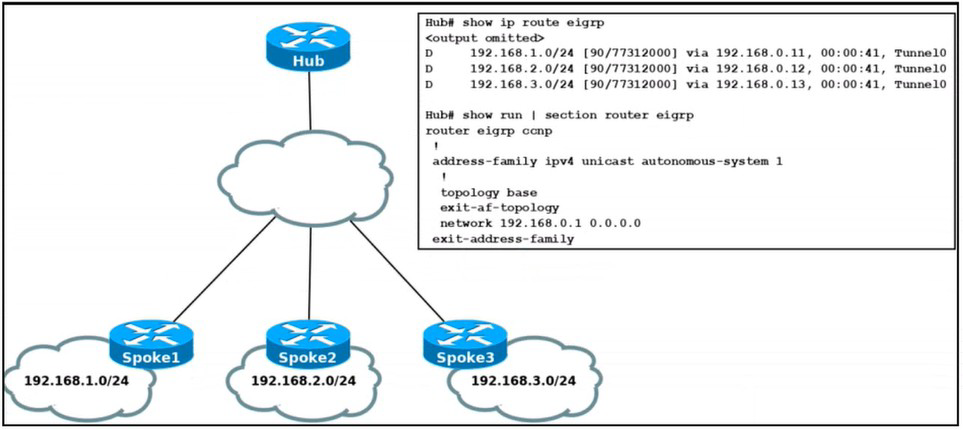
Spoke routers do not learn about each other's routes in the DMVPN Phase2 network. Which action resolves the issue?
A.
Remove default route from spoke routers to establish a spoke-to-spoke tunnel.
B.
Configure a static route in each spoke to establish a spoke-to-spoke tunnel.
C.
Rectify incorrect wildcard mask configured on the hub router network command.
D.
Disable EIGRP split horizon on the TunnelO interface of the hub router.
Disable EIGRP split horizon on the TunnelO interface of the hub router.
Refer to the exhibit.
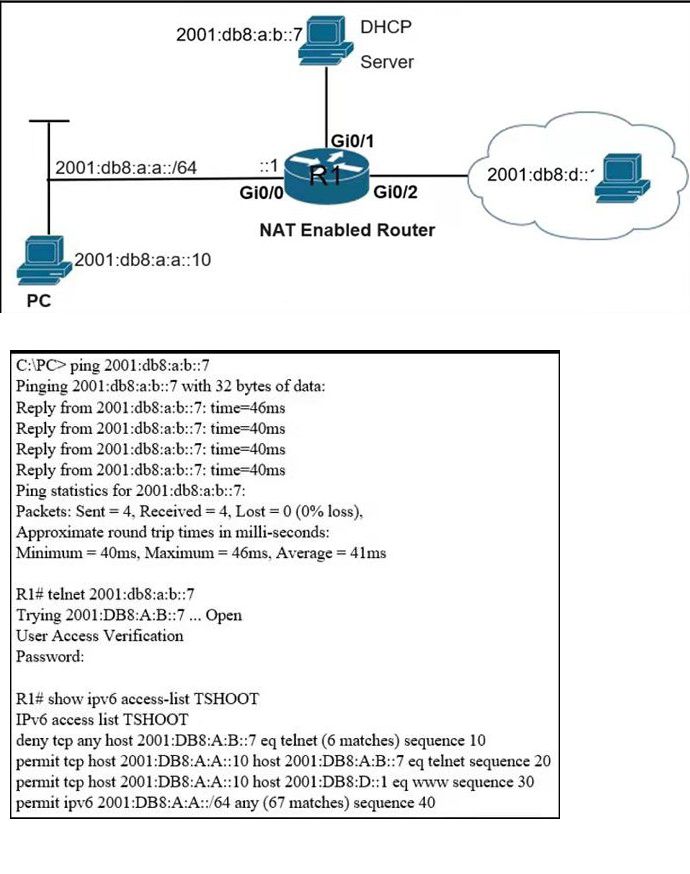
An engineer is troubleshooting a failed Telnet session from PC to the DHCP server. Which action resolves the issue?
A.
Remove sequence 30 and add it back to the IPv6 traffic filter as sequence 5.
B.
Remove sequence 20 and add it back to the IPv6 traffic filter as sequence 5.
C.
Remove sequence 10 to add the PC source IP address and add it back as sequence 10.
D.
Remove sequence 20 for sequence 40 in the access list to allow Telnet.
Remove sequence 20 and add it back to the IPv6 traffic filter as sequence 5.
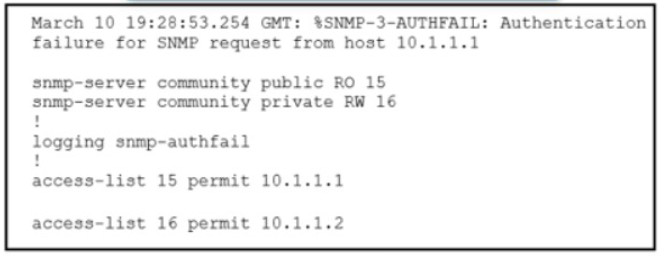
Refer to the exhibit Which action resolves the issue?
A.
Configure host IP address in access-list 16
B.
Configure SNMPv3 on the router
C.
Configure SNMP authentication on the router
D.
Configure a valid SNMP community string
Configure a valid SNMP community string
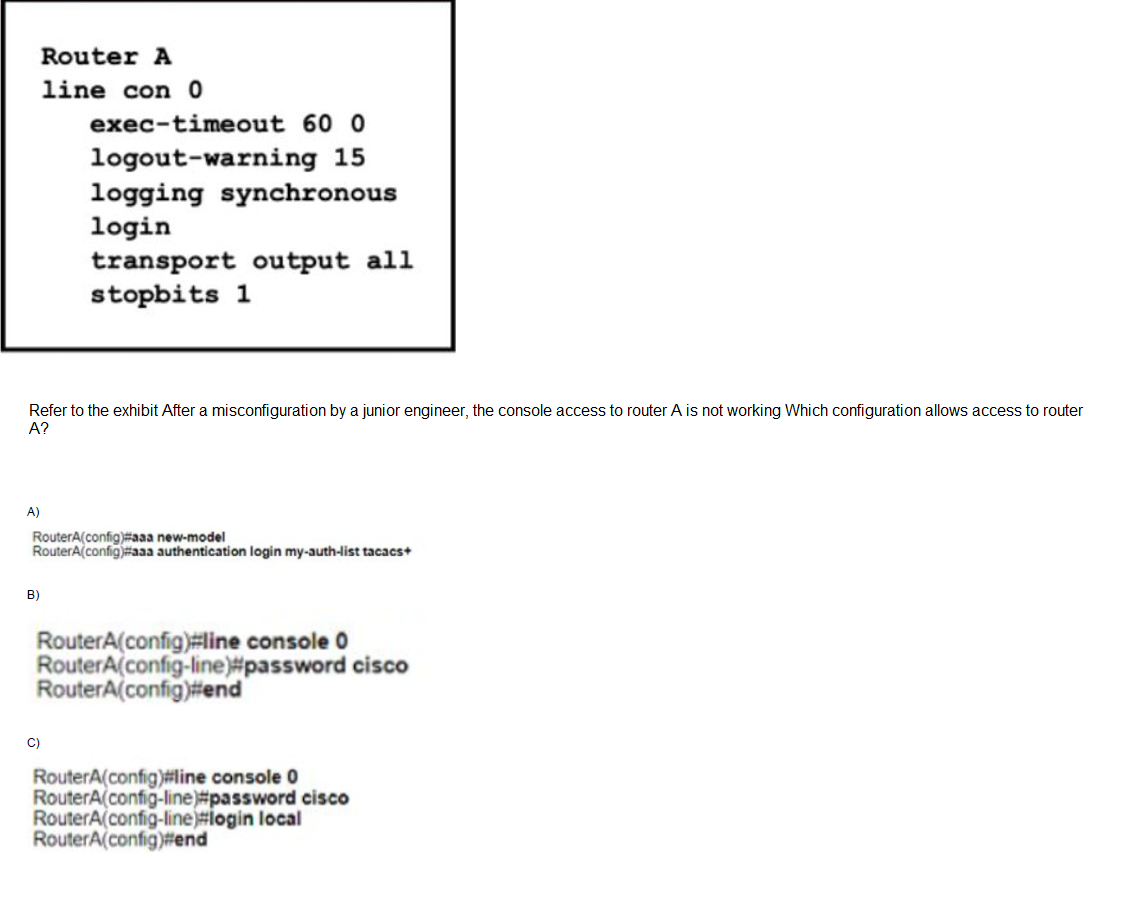
A.
Option A
B.
Option B
C.
Option C
D.
Option D
Option C
An engineer is implementing a coordinated change with a server team. As part of the change, the engineer must configure interlace GigabitEthernet2 in an existing VRF "RED" then move the interface to an existing VRF "BLUE" when the server team is ready. The engineer configured interface GigabitEthemet2 in VRF "RED"
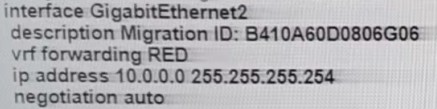
Which configuration completes the change?
A.
interface GigabitEthernet2
no ip address
vrf forwarding BLUE
B.
interface GigabitEthernet2
no vrf forwarding RED
vrf forwarding BLUE
ip address 10.0.0.0 255.255.255.254
C.
interface GigabitEthernet2
no vrf forwarding RED
vrf forwarding BLUE
D.
interface GigabitEthernet2
no ip address
ip address 10.0.0.0 255.255.255.254
vrf forwarding BLUE
interface GigabitEthernet2
no vrf forwarding RED
vrf forwarding BLUE
ip address 10.0.0.0 255.255.255.254
Refer to the exhibits.
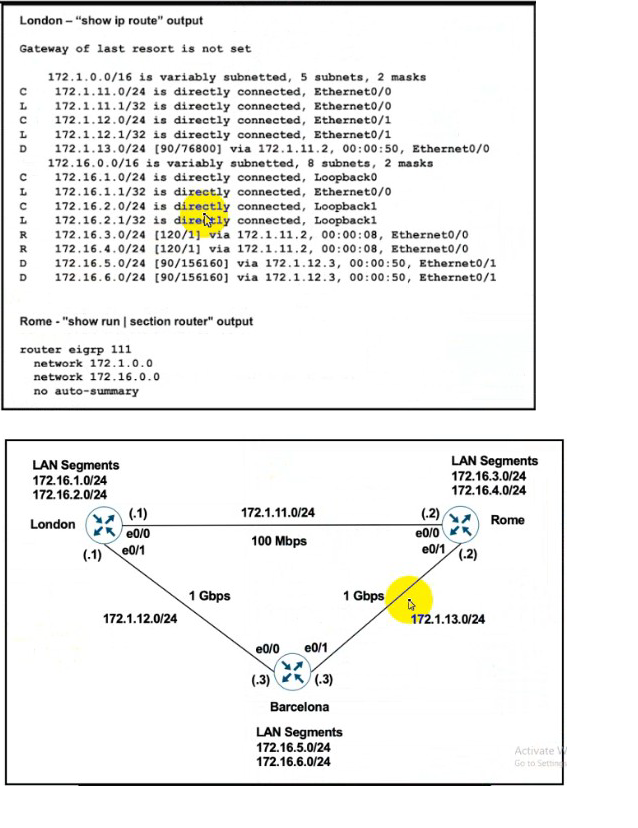
London must reach Rome using a faster path via EIGRP if all the links are up but it failed to take this path Which action resolves the issue?
A.
Increase the bandwidth of the link between London and Barcelona
B.
Use the network statement on London to inject the 172 16 X 0/24 networks into EIGRP.
C.
Change the administrative distance of RIP to 150
D.
Use the network statement on Rome to inject the 172 16 X 0/24 networks into EIGRP
Use the network statement on Rome to inject the 172 16 X 0/24 networks into EIGRP
| Page 26 out of 66 Pages |