Your Study Roadmap for Cisco 300-410 ENARSI Certification Success
The Cisco Enterprise Advanced Routing and Services (300-410 ENARSI) exam tests your ability to configure, implement, and troubleshoot advanced enterprise networks. It is a 90-minute concentration exam for the CCNP Enterprise certification and leads to the Cisco Certified Specialist – Enterprise Advanced Infrastructure Implementation credential.
Success requires practical routing knowledge, troubleshooting skills, and a clear understanding of Cisco's official exam objectives.
Cisco 300-410 ENARSI Exam Blueprint and Weightage
The ENARSI v1.1 exam blueprint divides the syllabus into four major domains:
| Exam Domain | Weightage |
|---|
| Layer 3 Technologies | 35% |
| VPN Technologies | 20% |
| Infrastructure Security | 20% |
| Infrastructure Services | 25% |
| Total | 100% |
Understanding these percentages helps you allocate study time according to exam importance.
High-Priority Topics You Should Master
Layer 3 Technologies (35%)
This is the highest-weighted domain. Prioritize:
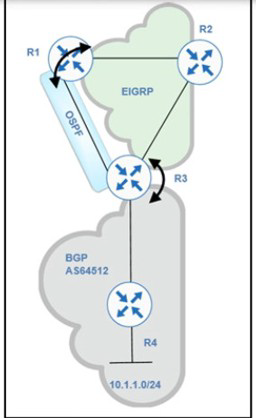
EIGRP and OSPFv2/OSPFv3 troubleshooting.
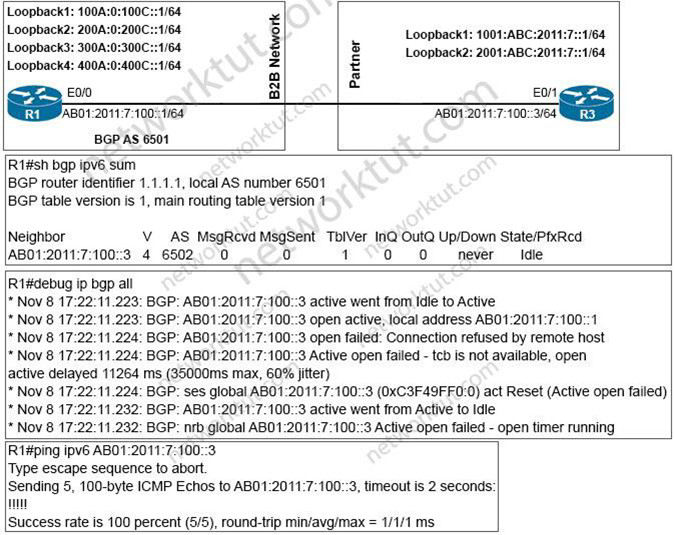
BGP path selection, attributes, and route filtering.
Route redistribution and route maps.
Policy-Based Routing (PBR) and VRF-Lite.
VPN Technologies (20%)
Understand MPLS operations, MPLS Layer 3 VPNs, and DMVPN configurations involving GRE, NHRP, and IPsec.
Infrastructure Security (20%)
Study AAA authentication, TACACS+, RADIUS, IPv4/IPv6 ACLs, uRPF, Control Plane Policing (CoPP), and IPv6 first-hop security.
Infrastructure Services (25%)
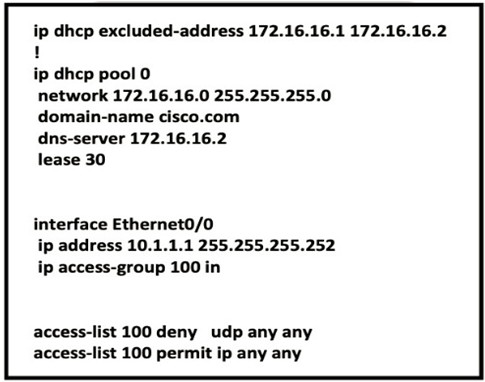
Focus on DHCP troubleshooting, SNMP, Syslog, IP SLA, NetFlow, device management, and Cisco DNA Center Assurance.
Where Should You Spend More Study Time?
Allocate approximately 60% of your preparation time to Layer 3 Technologies and Infrastructure Services, reflecting their combined blueprint weightage.
Pay particular attention to BGP troubleshooting, OSPF neighbor issues, redistribution loops, routing-table interpretation, and network performance monitoring.
Practical Skills That Make a Difference
Memorizing commands alone is not sufficient for ENARSI preparation. Practice interpreting the outputs of show ip route, show ip bgp summary, and show ip ospf neighbor.
Build routing labs, introduce configuration errors, and identify the causes of connectivity failures. These exercises strengthen the troubleshooting skills emphasized by Cisco.
Improve Your Readiness with Cistified Practice Tests
Cistified.com provides free Cisco 300-410 ENARSI practice questions and paid mock tests to support your preparation.
Use free questions to identify knowledge gaps, then take full-length mock exams to practice under timed conditions.
Review incorrect answers, revisit weak blueprint domains, and repeat practice sessions to measure improvement.
Final Preparation Checklist
Before scheduling your exam, make sure you can:
Troubleshoot advanced routing and VPN configurations.
Interpret Cisco IOS command outputs.
Apply routing policies and security controls.
Diagnose infrastructure service failures.
Complete timed practice tests with consistent results.
Start practicing with Cistified and turn your ENARSI knowledge into exam-ready troubleshooting skills.
Build Confidence with Cisco 300-410 ENARSI Scenario-Based Practice
Preparing for the ENARSI exam involves understanding how different networking technologies work together in enterprise environments. Practice scenario-based questions that require you to analyze routing failures, identify configuration errors, and select appropriate solutions.
Common Mistakes to Avoid During ENARSI Preparation
Memorizing commands without understanding their functionality.
Ignoring IPv6 routing and security concepts.
Overlooking route filtering and redistribution scenarios.
Studying individual protocols without understanding their interactions.
Reviewing correct answers without analyzing incorrect options.
Track Your Cisco 300-410 Exam Preparation Progress
Regularly attempt Cisco 300-410 practice questions to evaluate your understanding of advanced networking concepts. Track your accuracy, identify recurring mistakes, and revisit challenging topics. Consistent practice combined with hands-on lab experience can improve your problem-solving skills and exam readiness.